Time flies fast, as it is described in a Chinese poetry “canoe on both sides already past thousands of mountains”, the Shanghai Gold Exchange (SGE) has come to the age of 15. During the development in past 15 years, SGE has been followed the right guidance of the People’s Bank of China and the support of its members and market participants, to be actively respond to its market needs and strengthen the product innovation. These endeavors helped SGE growing gradually from an exchange that carries with single product category and small transaction volume to a well-known globalized trading platform nowadays, while consider of its full-category trading contracts, its sufficient market liquidity, and its wide trading linkage from the domestic to the international market. With its solid status in China’s gold market, SGE has become a significant influence in the global gold market and the financial market system progressively.
Price Matching Market
The price matching trading is the traditional product which was launched ever since the establishment of SGE in 2002. The price matching market is designed to provide a professional, secured and stabled investment platform in order to enhance the liquidity and transparency in the SGE market. The price matching market is consisted by standard contracts of precious metals including gold, silver, and platinum. The contract is traded through a matching transaction methods under the principle of price priority and time priority. The price matching trading generates actual, consecutive, and authoritative price through the trading mechanism of fairness, openness, effectiveness, and competitiveness.
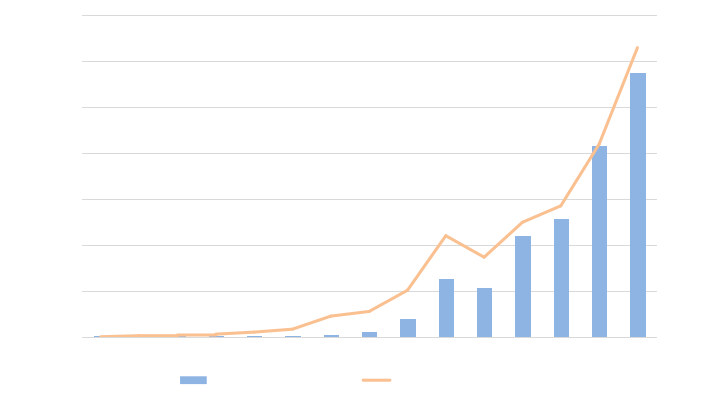
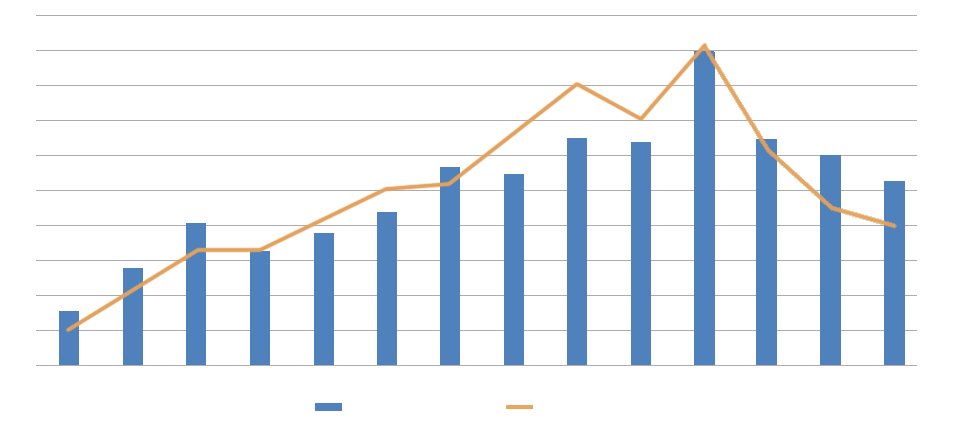
The Total Trading Volume and Turnover of the Price Matching Contract (ended by December 31, 2016)
Gold Benchmark Price Market
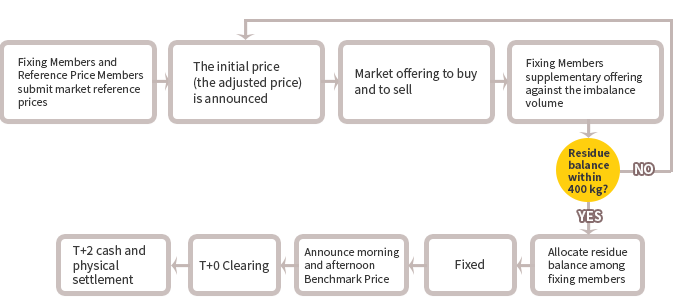
The Shanghai Gold Benchmark Price was launched by SGE as the first Reminbi-denominated gold benchmark price trading on April 19, 2016 with transaction and fund settlement all processed on the SGE price trading platform. The benchmark price trading is a pricing product with trading unit of RMB per gram and its underlying gold ingots with a standard weight of 1kg and a fineness of no lower than 99.99%. The mechanism of Shanghai Gold Benchmark Price follows a centralized pricing process with the principle of ‘tendering volume based on price’, the final benchmark price is determined when the price and the volume reach the relative balance during the auction period of the trading. Benchmark price trading provides a block trading platform to all market participants which uses the ‘Shanghai Gold Benchmark Price’ as a fair market price. Moreover, it will bring benefit to the market participants to enhance trading efficiency, it will also bring benefit to the market as allocate resource, increase market scale, and improve market liquidity.
OTC Market
The OTC trading pattern was introduced to the market in 2011. The market participants and its counterparties agree on the trading elements containing trading product, quantity, and delivery manner through negotiation. It is a supplementary market to the price matching market in SGE, which acts as a service platform and solution provider to different institutional customers including hedging, allocated investment, and tailored trading. The OTC market, on the other hand, is also an important sector of the global gold market system. In order to implement the spirit of ‘Several Opinion Regarding the Promotion of China’s Gold Market Development’ announced by the central government, SGE jointly launched the national interbank gold OTC market with China Foreign Exchange Trade System (CFETS) in 2002. This joint OTC platform created a precedent of the cross-market cooperation in China. The launching of the interbank gold OTC market is conductive to fulfill the diverse trading needs of the investors and enrich the trading mode in the market, it also promotes to form the multi-layer structure of the trading system in China’s gold market.
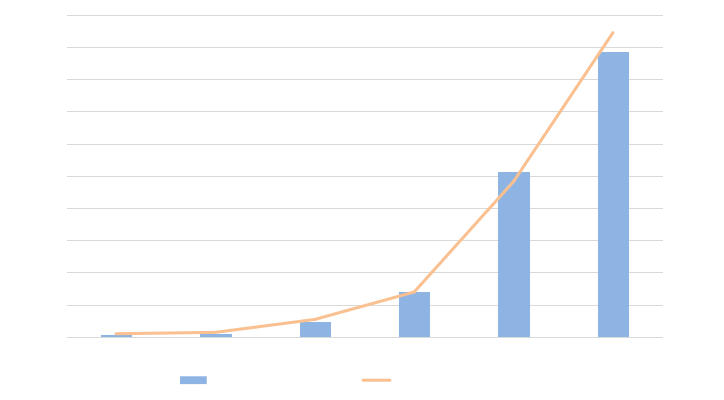
Notes:Data contains OTC contracts of spot, forward, and swap
Gold Leasing Market
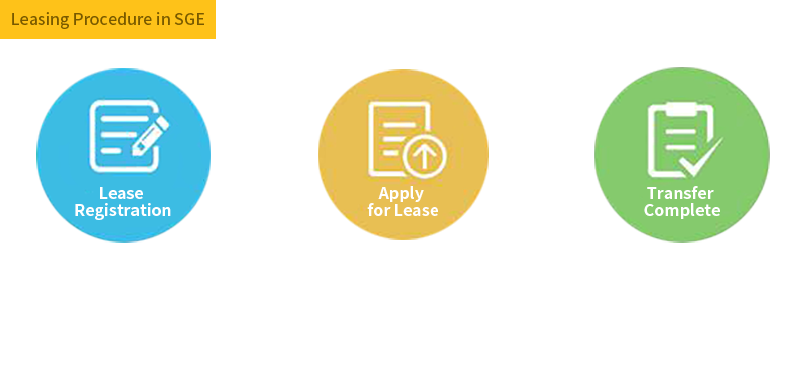
The gold leasing business was launched in SGE in August 2004 with the first gold lease application settled on August 24, 2004. The gold lease sector was developed with a steady pace since 2007. The leasing business helps the domestic commercial bank to enrich their gold, silver, platinum and other precious metals product sectors. to active the physical bullion in stock, and it also help to promote the quotation capacity of the market maker during the transaction. On the other hand, jewelry companies and gold refineries can mitigate price risk, lower corporate operation cost, and release the cash flow pressure by adopting gold leasing business. There are nearly 2,000 participants in gold leasing market at the present, the structure of the participants is formed by financial institution to gold upstream and downstream companies. Detailed participants including national commercial banks, joint-equity commercial banks, local commercial banks and foreign banks, the gold ETF, securities company, mining company, jewelry company, and refineries.
Pledge Financing Market
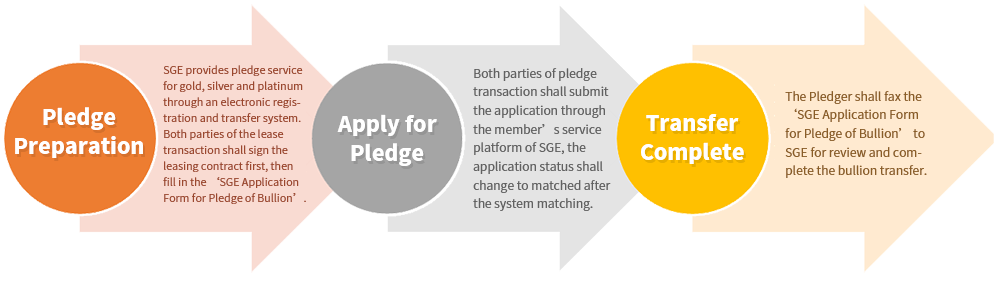
The pledge financing service was introduced to the market on March, 2005. It can help the pledger corporation to quickly solve the operation financing problem, apply for more liquid fund, and improving the economic performance of the corporation. Moreover, financial institutions like banks can provide more loan service to the market while reducing the loan issue risk through the pledge service.
The Gold ETF Market
SGE jointly issued its first gold fund product with Shanghai Stock Exchange and Shenzhen Stock Exchange in June 2013. This gold fund product ranked as the first cross-market, cross-system, and cross-product fund in China’s financial market. There are four fund management company underwrite for this gold ETF contract: the Efund Management Co., Ltd., the Guotai Junan Securities Company, the Huaan Securities Company, and the Bosera Funds Company. The holding position of this gold ETF contract has exceeded 50 tons calculated by the end of June 2017. The launching of gold ETF product is the experiment for asset securitization of China’s gold market, and it will help to satisfy the asset allocation needs of the institutional investors. Furthermore, the gold ETF not only achieved the goal of connection both security market and gold market in China, but also built a linkage to convert between the gold assets with the stock and bond.
Settlement Clearing Service
The settlement clearing service of SGE is under the principle of ‘centralization, netting, and multi-tiered’. Centralization means SGE provides centralized clearing and performance guarantee service to all its members, netting refers to that SGE clears its members according to the net results of all executed transactions, and multi-tiered means SGE clear trans with its members and each member then clear trades with its customers according to the result of SGE. There are 18 certified margin custodian banks serve for the SGE’s main board and 9 certified banks serve for the SGE’s international board.
Detailed information as: Industrial and Commercial Bank of China (ICBC), Agriculture Bank of China (ABC), Bank of China (BOC), China Construction Bank (CCB), PingAn Bank, Bank of Shanghai, Huaxia Bank, The Industrial Bank, China Merchant Bank (CMB), Shanghai Pudong Development Bank (SPD), Bank of Communication, China Everbright Bank (CEB), China Guangfa Bank, China Citic Bank, Postal Saving Bank of China, Bank of Beijing, China Minsheng Bank, Shanghai Rural Commeral Bank.
Delivery and Storage Service
With the well-established delivery management system of the physical bullion, SGE provides its members and customer with a full range of delivery and storage service including bullion clearing, registration and custodian, physical delivery and transfer, storage and logistic, assay and certification, lease and pledge, the creation and redemption of physical contracts of the gold ETF. The physical delivery follows the principle of ‘one account, one code’ which each member of customer receives a unique bullion account code for clearing and delivery of its inventory at SGE. There are 61 certified vault located in 35 cities in China that perform the vaulting service for SGE, all physical bullion is allocated and transferred by SGE. By the end of 2016, SGE has been ranking as the largest gold physical exchange for its floor transactions for 9 consecutive years.
Improving and Perfect Risk Control System
SGE always take very high attitude to its risk control procedure and constantly improving its risk control system in order to effectively prevent and resolve the market risk, and to further ensure the safe and stable of its market operation. SGE has been striving to construct a risk control framework that is accorded with the actual China’s gold market under the strict control standards, to create a healthy and formal operation environment and to maintain the normal order of China’s gold market, so as to safeguard the lawful rights and interests of its investors. SGE applies risk management methods including margin requirements, price limit, deferred fee, extended position fee, position limit, trading limit, large position reposting, forced liquidation, risk warning and trade monitoring.
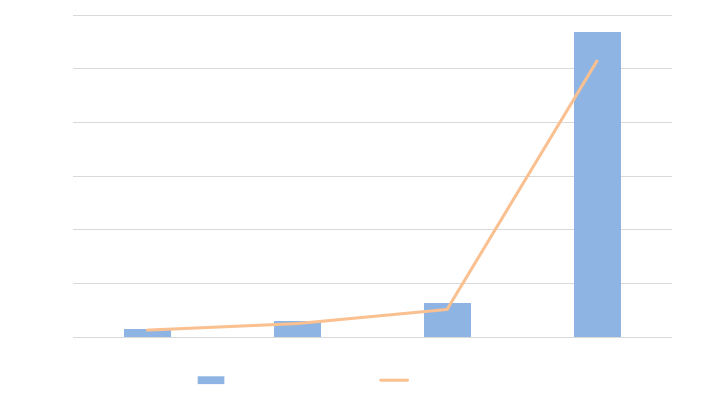
The historical gold trading volume and turnover of SGE
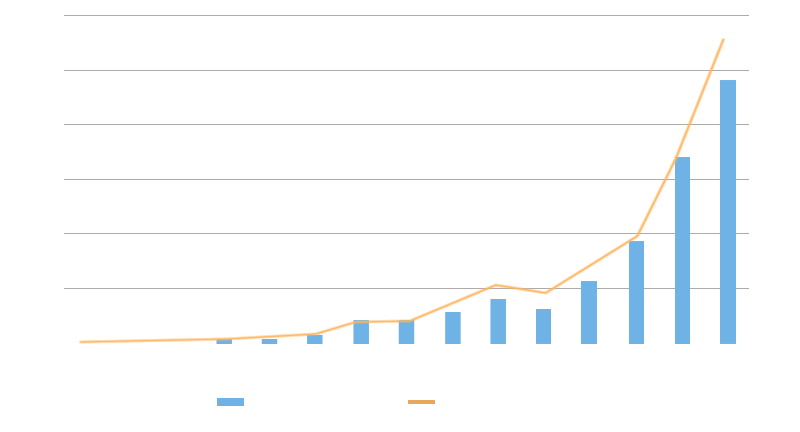
The historical silver trading volume and turnover of SGE
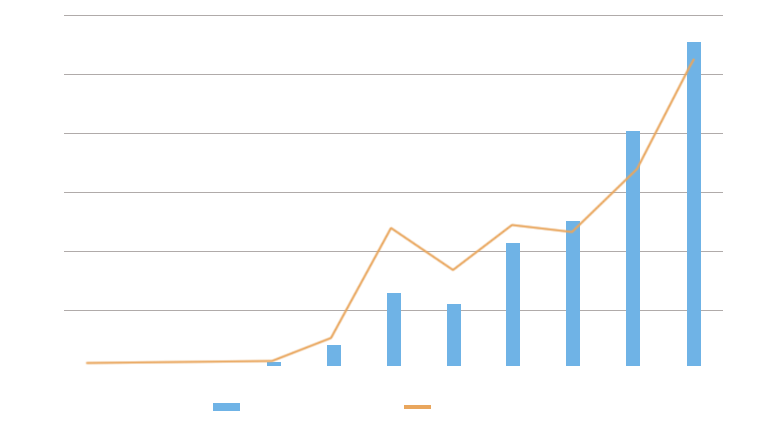
The historical platinum trading volume and turnover of SGE
- SGE’s Product innovation and Highlights
-
October 30th2002
- SGE launched the first physical gold contracts, including Au99.99, Au99.95, Au99.9 and Au99.5.
-
August2003
- SGE officially launched Pt99.95 contract.
-
February2004
- SGE launched Au(T+5) contract for trail trading.
-
June2004
- SGE launched Au50g contract.
-
August2004
- SGE launched Au(T+D) contract for trail trading.
-
July2005
- The personal trading system, which jointly developed by Industrial and Commercial Bank of China (Shanghai Branch) and SGE, has launched.
-
November2005
- SGE’s night trading system was launched and put into operation.
-
October2006
- SGE launched Ag99.9 and Ag(T+D) contracts for trail trading.
-
December2006
- Au100g, the SGE’s listed gold contracts, was available for trading.
-
March2007
- SGE extend the night trading session from 23:30 to 2:30 (the next day). The daily trading hours increased from 6 hours to 9 hours.
-
November 5th2007
- Au (T+N1) and Au (T+N2), the SGE’s listed gold contracts, were available for trading.
-
November 25th2013
- SGE launched the interbank gold price asking swap contracts.
-
January 1st2014
- SGE launched mAu(T+D), and adjusted the contract size of Au99.99.
-
July 7th2014
- SGE introduced its leasing business.
-
September 18th2014
- SGEI successfully put into operation.
-
October 8th2014
- SGE launched silver price inquiry spot contracts.
-
November 18th2014
- SGE launched the upgraded version of Au (T+N) contracts.
-
January 5th2015
- SGE officially launched price inquiry trading business on the international board.
-
February 2nd2015
- Price inquiry option was launched.
-
March 2nd2015
- SGE launched the new version of clearing system.
-
July 10th2015
- Shanghai-Hong Kong Gold Connect was officially launched, enabling investors to access both markets from either location.
-
October 12th2015
- SGEI officially launched its margin collateral service.
-
January 1st2016
- SGE launched SGE launched the price inquiry options products for online trading (phase 2),enabling price inquiry options products to be managed throughout the online process, including their online trading and duration management.
-
January 26th2016
- SGE launched its first mobile app "YiJinTong".
-
April 19th2016
- SGE officially launched Shanghai Gold Benchmark Price, the first Renminbi-denominated gold benchmark price in the world.
-